“The core task is immediate, but price confidence starts only after entering trip details.”

Uber
Review the campaign where the decision happens.
Lifecycle email. Public-source demonstration with modeled outcomes, not a statement from Uber.Uber live journeyLifecycle email - session P-013 Samuel OrtizHospitality operator · iPhone 15 / Chrome
Playing slowly · 3.6s per step
Scroll inside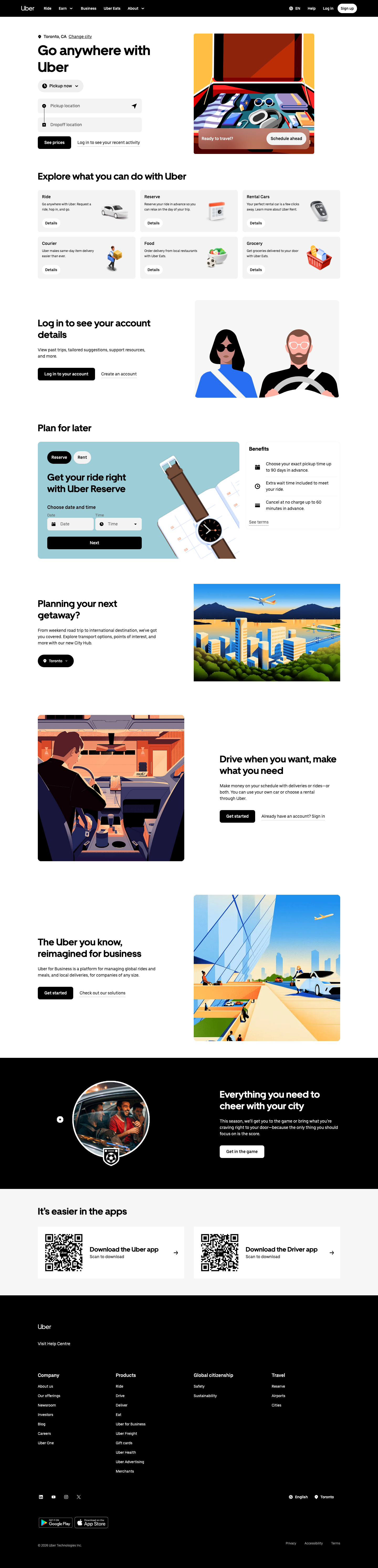
Samuel Ortiz31 · Hospitality operatorUnsure Ride request form
Before and after product surface
Ship the fix, then run the same task again.
Scroll inside

The saving cap is visually separated from the primary CTA.
Scroll inside
Fix v2 visible in contextMove the CA$20 cap above Claim now and shorten the repeated product rail.+16% modeled growth

Two matched reviewers found the proof without leaving the decision. Confidence improved after the second revision.
01Baseline58 · friction visible02Fix v172 · +12% modeled growth03Fix v281 · +16% modeled growth
+23 score points-31% decision delay+18% modeled engagement82/100 matched users improved
Scored evidence
The saving cap is visually separated from the primary CTA.
Design82
Clarity74
Mobile63
CTA57
Tested intervention
Move the CA$20 cap above Claim now and shorten the repeated product rail.
Before fix$18.2k
Awaiting fix$18.2k
Modeled positive correlationFix shippedT-104 pricingT-118 checkoutT-127 copyWeek 0
RevenueEngagementBaseline
Seasonal campaign simulator
Test the moment, not only the permanent site.
25% off selected products
Urgency vs fit confidence
Black Friday25% off selected products
A discount without its cap feels larger than it is. That trust cost reaches the CTA.
Keep 25% prominent, put the maximum saving on the next line, and remove the second button.
On mobile, the cap enters after the first CTA. The replay shows a scroll-back before the click.